


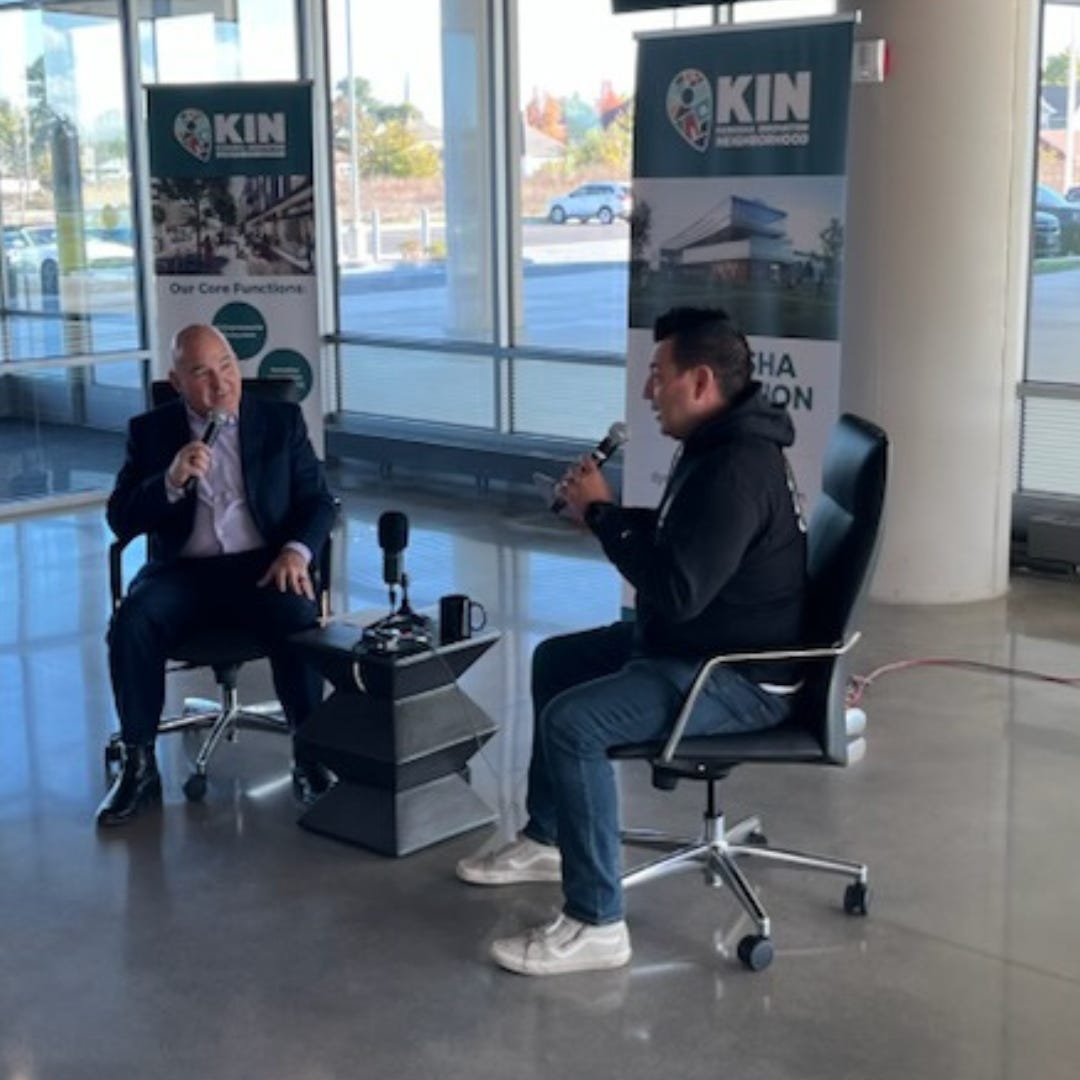
Featured article sponsored by the Kenosha Innovation Neighborhood.
1. Define Innovation or Risk Misalignment
“Innovation for us is taking an idea and turning it into something with purpose.”
Mark doesn’t let innovation stay fuzzy. Jockey breaks it down into:
Routine (incremental improvements),
Disruptive (new models), and
Radical (future-focused, problem-unspoken-by-the-customer stuff).
Why it matters:
When teams know which type of innovation they’re aiming for, decisions get sharper and so does resource allocation.
2. Stay Uncomfortably Close to the Customer
Jockey still runs its own call center because Fedyk believes raw customer input is a strategic asset. It’s not just about surveys; it’s about listening for what’s not being said.
“We look for the white space: pain points customers don’t even realize they have.”
Executive signal: Customer proximity isn’t just for B2C. Create systems that surface real-world frustrations early and often.
3. Make Innovation a Mindset, Not a Silo
Jockey may be over a century old, but Fedyk describes it as a “150-year-old startup.” Why? Culture.
“Innovation isn’t a department. It’s part of who we are.”
That kind of language matters. It gives teams permission to explore, test, and rethink without waiting for an innovation lab to lead the way.
4. Experiment First, Justify ROI Later
Short-term ROI pressure kills good ideas. Fedyk made it clear: Jockey backs experiments even when returns aren’t immediate.
“You can have all the tech in the world, but if your culture doesn’t support curiosity, you’re not going anywhere.”
Advice for execs:
Shift from “prove it will work” to “prove it’s worth trying.”
Think portfolio: a few wins cover the cost of many learning experiments.
Value insight ROI—what the team learns is often as important as revenue.
5. Anchor Innovation in Purpose and People
Mark’s closing thoughts weren’t about process, they were about why Jockey innovates at all.
“We don’t innovate to be cool. We innovate to make people’s lives better. That’s the legacy we’re building on.”
This isn’t soft talk. It’s strategy. When purpose drives innovation, alignment follows and so does staying power.
What ambitious readers should notice:
Innovation inside a legacy company is usually less about hype and more about clarity, process, and leadership discipline.
If you want to work near meaningful innovation in Milwaukee, don’t only look at startups.
Operators who can modernize old systems may end up with more leverage than people chasing trendier labels.
Full conversation with Mark and me:
Milwaukee’s future will not be built only by new companies. It will also be shaped by leaders inside established ones who know how to adapt, experiment, and move institutions forward.