


Ahhhh, spring training vibes and warm sunshine in January. Until a few weeks ago, I’ve never experienced these things together in real life.
Usually this time of year means I’m in Milwaukee still scraping ice off my windshield.
Instead, I went to Phoenix and was invited into something that felt more like a small city.
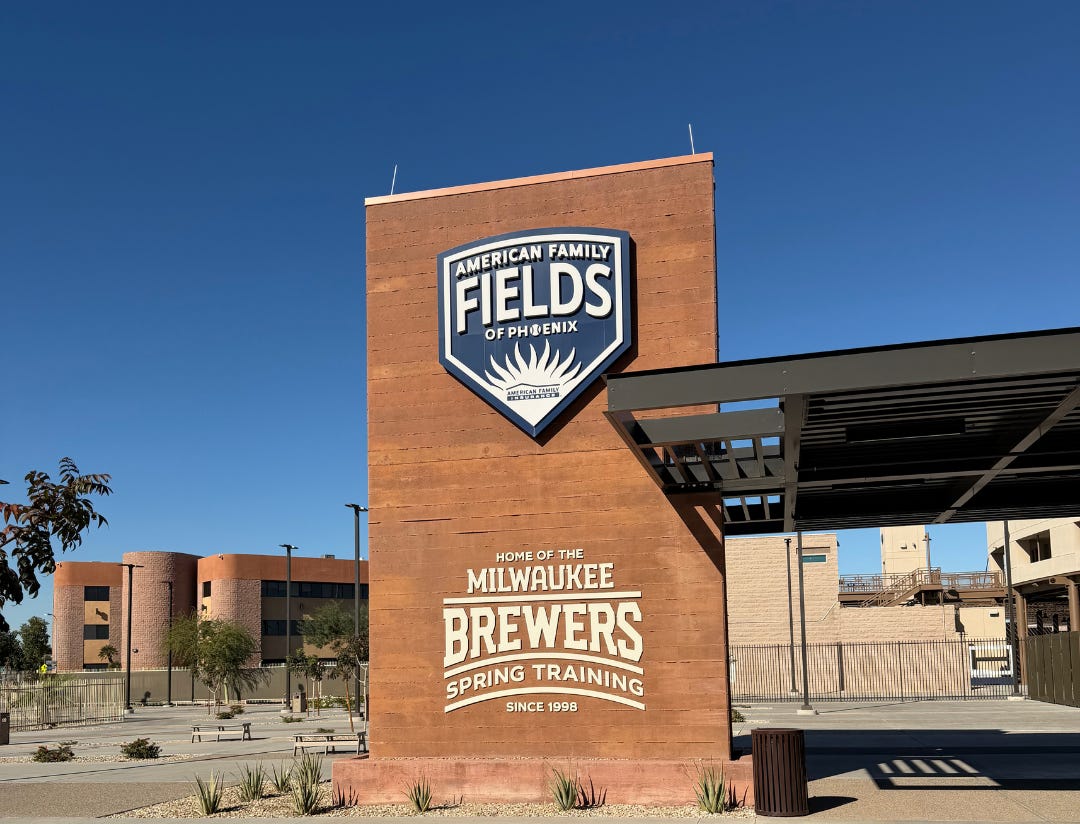
Seven and a half fields. Hundreds of players. Coaches, trainers, dietitians, psychologists, sports science staff. Cafeterias. Locker rooms with very specific smells. Cameras everywhere. Networks running quietly underneath it all.
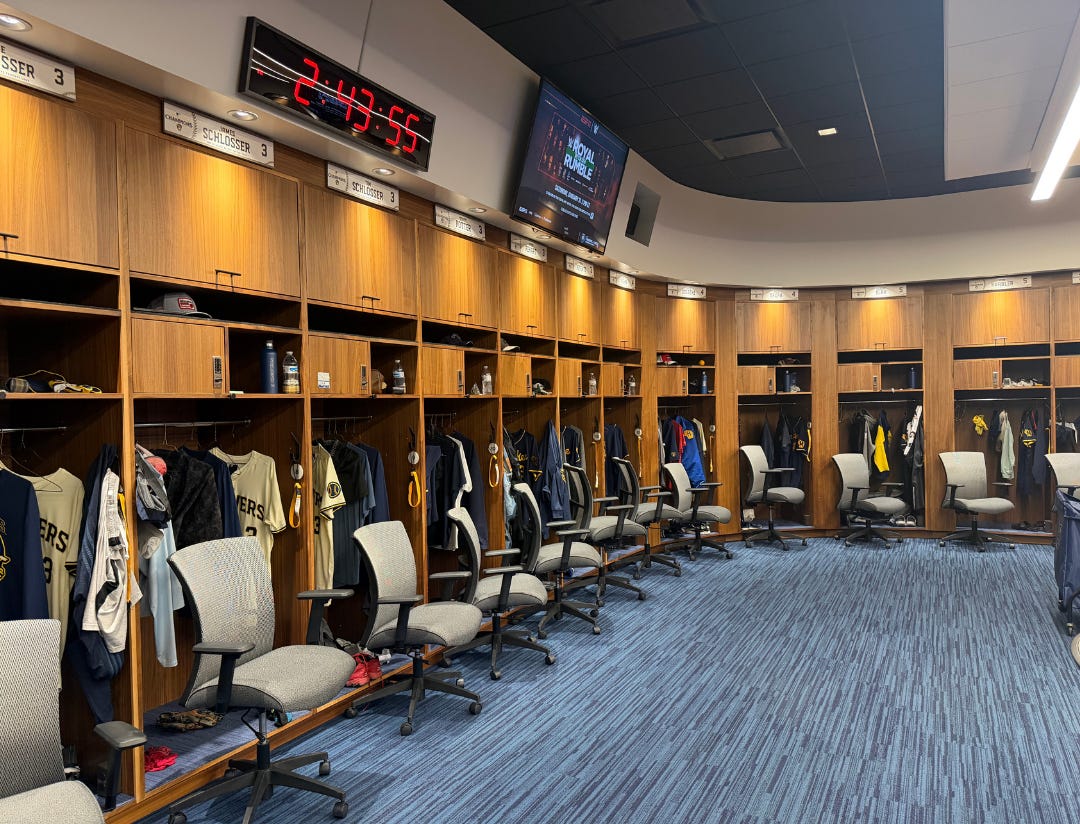
And then it hit me. This place isn’t just about baseball. It’s about systems.
Why this matters beyond baseball: sports technology is not just a niche. It’s one more example of how Milwaukee’s future can be shaped by industries where community, innovation, and business model evolution all intersect.
A Facility That Operates Like a City
While I was there, spring training hadn’t officially started yet, but the Brewers’ Phoenix complex was already alive.
Minor league camps were underway. Players are walking between fields. Staff are everywhere. By the time things fully ramp up, there can be 270+ players on these fields, majors and minors combined, for nearly two months straight.
Even more when you include the vast number of people required to support them.
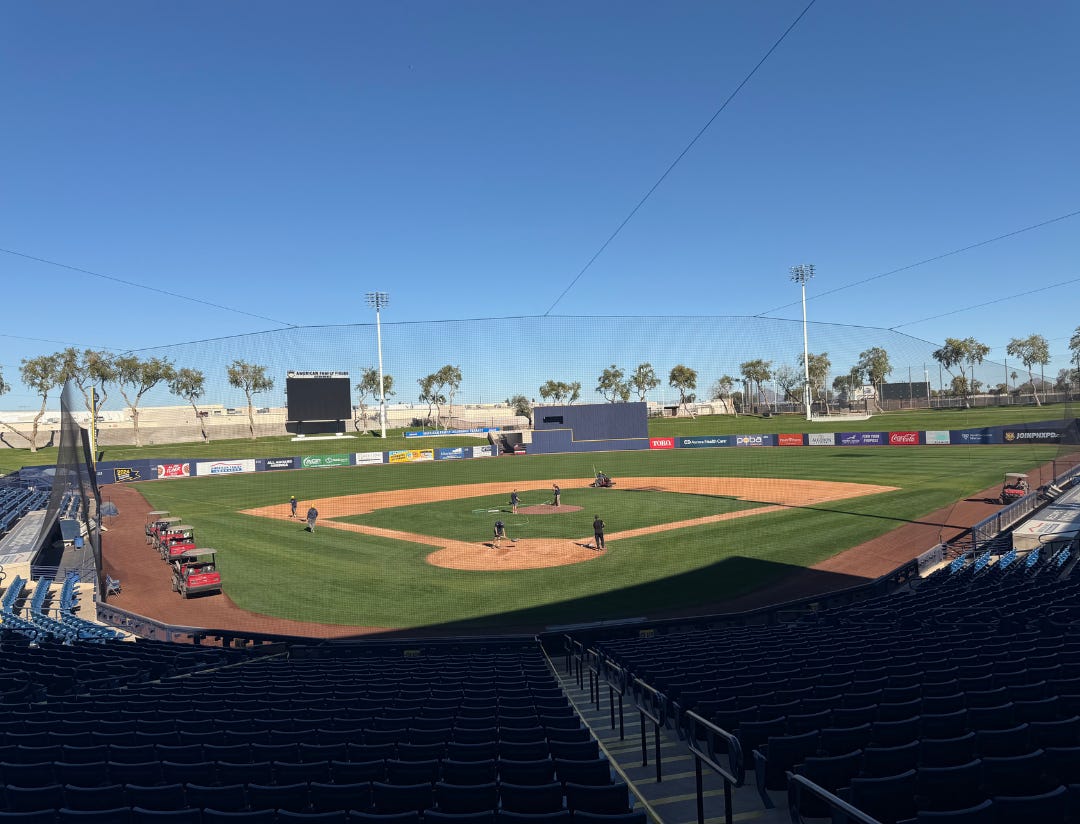
What struck me wasn’t just the scale, but the intention. This isn’t a seasonal spot the Brewers drop into and abandon when the weather warms up back home.
It’s a year-round operation with real impact.
Which raised a bigger question for me as I was shown around the complex: what responsibility comes with that kind of presence?
Community Matters to the Brewers
Andrew Daugherty, who oversees Arizona business operations for the Brewers, and who led my tour of the complex, put it plainly: they consider West Phoenix home.
That matters.
Andrew Daugherty, Milwaukee Brewers of Business Operations in Arizona speaks to the importance of community.
Yes, this is technically Diamondbacks territory. Yes, the Brewers are visitors in a geographic sense. But culturally? They show up like they live here all year.
They host one of the largest fireworks shows on the west side of Phoenix every July. They run camps and outreach programs. And when the players leave, they don’t lock the gates and go home.
Instead, they open and create community space.
One of the most interesting things I learned was about the Learning Lounge, an active, safe educational space managed with Grand Canyon University. It’s been used for K–12 programming, and now they’re evolving it into something bigger: camps, structured learning, and a focus on where education is headed next, from STEM to AI.
If all of this sounds familiar, Brewers fans, it should. It’s the same ethos the our beloved team has carried in Milwaukee for decades.
For the Milwaukee Brewers, community isn’t marketing. It’s their operational DNA.
Invisible Infrastructure That Makes It All Work
Then there’s the technology, the stuff fans rarely think about unless it breaks.
My friend Derek Hyde who invited me to Phoenix and who also serves asSenior VP of Information Technology for the Brewers, organizes his focus into three buckets: fan experience, baseball operations, and league-mandated MLB infrastructure.
Each one is complex on its own. Together, they’re staggering.
You might think of technology for ticketing, buying your beer and dog, security, but it’s so much more.
The room where team management and baseball tech come together for player evaluation and selection.
From network backbones to compliance with Major League Baseball’s technical standards, there are separate systems layered on top of shared infrastructure. Redundancy everywhere, because failure isn’t an option when you’re running live events, high-performance athletics, and a public venue all at once!
This isn’t “IT support.” to me, it’s more like city planning.
And what really stood out to me wasn’t just what they run — but how they staff it.
Developing People the Way You Develop Players
Much of the Brewers’ IT team is homegrown. Interns who stayed. Staff who learned the facility inside and out. Multiple 20-year veterans.
In a world obsessed with hiring unicorns, the Brewers quietly invest in continuity.
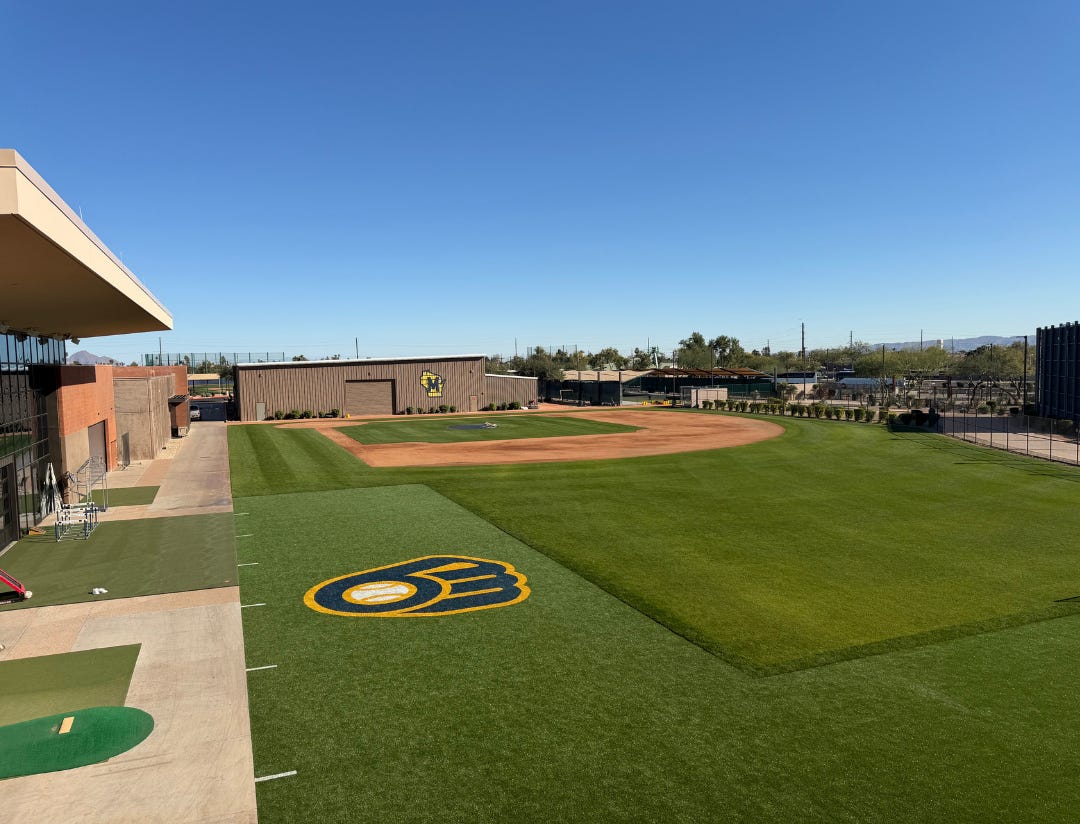
That matters when your systems are unique, your environment is non-standard, and your success depends on people understanding not just technology, but the team culture around it.
It’s hard not to see the parallel: develop talent internally, then give them time and trust.
That philosophy doesn’t just apply to the players on the field.
Phoenix as a Sandbox for Milwaukee
One of the most fascinating ideas we talked about was how the Phoenix facility functions as a testing ground for what makes it to Milwaukee.
Spring training happens earlier in the calendar. Crowd sizes are smaller. Usage patterns are different. There’s more access to players, more experimentation behind the scenes, more flexibility.
That makes Phoenix a kind of sandbox.
Technology can be tested here before rolling out in Milwaukee. Operational changes can be evaluated without the pressure of a 40,000-seat stadium on Opening Day. Player-focused tools can be refined in an environment designed for instruction and development.
Because most times innovation starts quietly, where mistakes are survivable.
The Data You Never See
And then there’s the stuff that still kind of blows my mind.
Derek Hyde, SVP of Information Technology for the Milwaukee Brewers talks deep baseball tech.
Hawk-Eye tracks the ball velocity, spin rate, trajectory. It’s the backbone of what fans know as Statcast, and it’s standardized across Major League and Minor League stadiums.
Kinetrax tracks the body. Markerless motion capture and skeletal analysis. It captures how a pitcher’s body twists. How a batter generates force. How an outfielder takes the best line to a ball. All through video, all layered together.
Some of the cameras, hidden in plain sight, that capture ball and player data during the game.
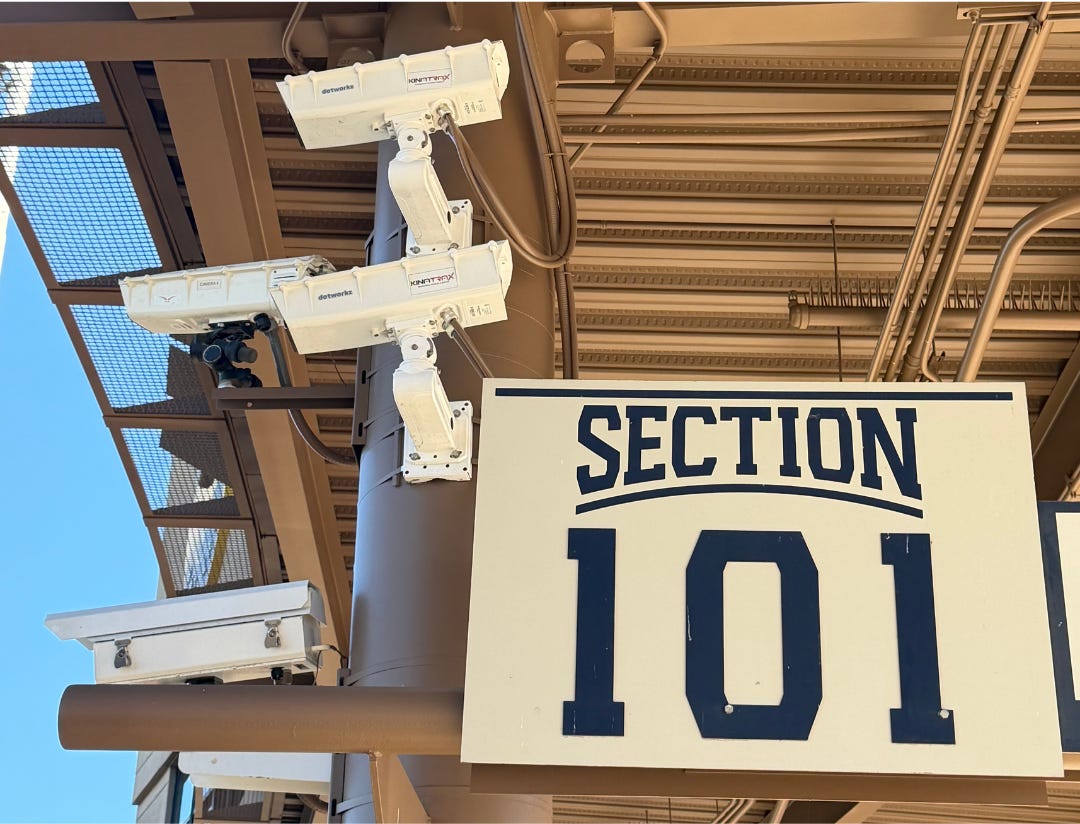
Actual ball data plus body data equals insight, not just for performance, but for health, longevity, and smarter decision-making and coaching.
This, and other things I saw that I can’t mention or photo, are the future of baseball, happening camera by camera.
Still the Brewers, Wherever They Are
I grew up watching this team in the ’80s. Back then, none of this existed, at least not in any recognizable form.
Side note: Robin Yount, my hero, was great even without all of this technology LOL!
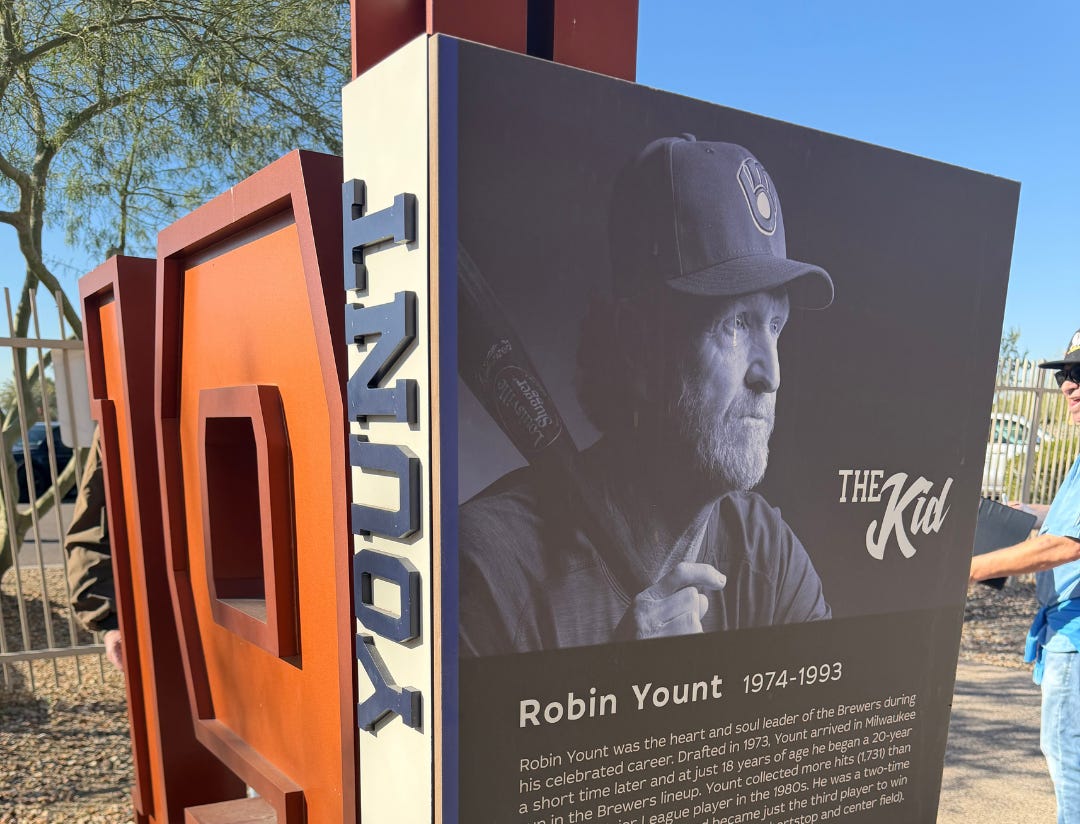
But standing in the present, in Phoenix, surrounded by systems that feel more like infrastructure than athletics, it hit me: the Brewers aren’t just playing baseball games. They’re building lasting environments.
Wherever they go, they bring Milwaukee with them. Not as a logo (like they do on the weights), but as a way of operating.
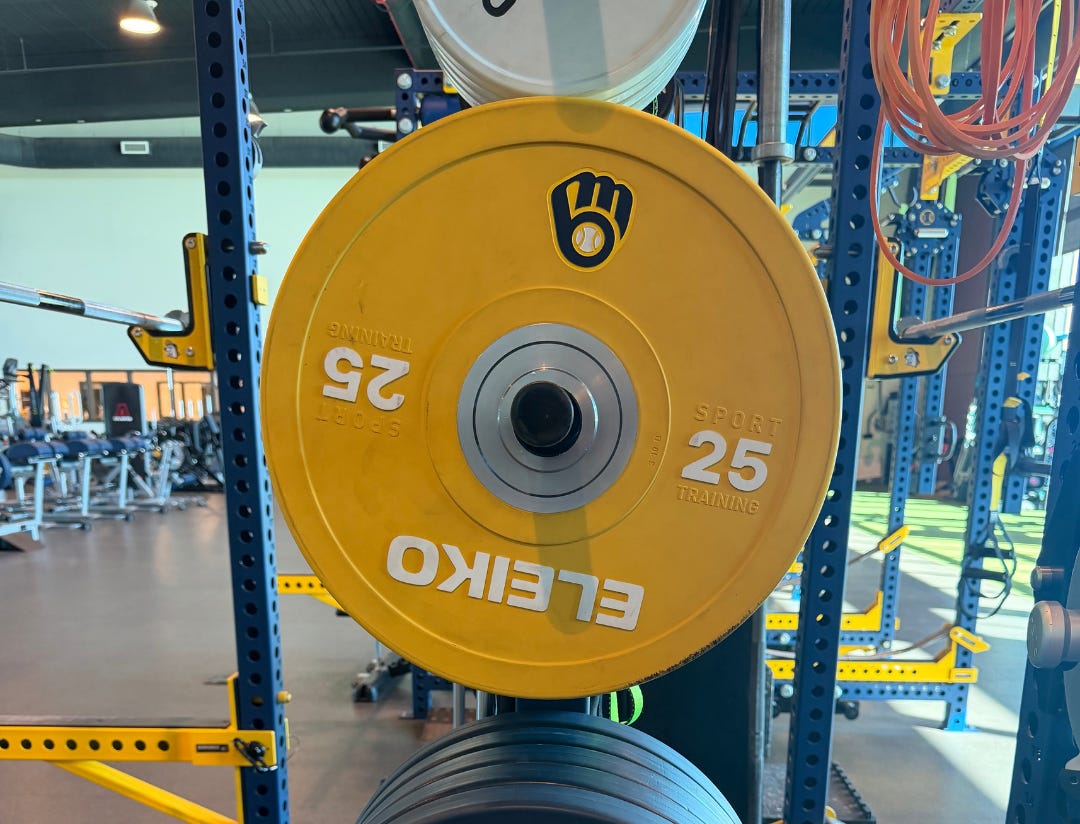
That’s what made this visit stick with me.
I came expecting a field. I left thinking about how we take care of our community.
Love you Milwaukee!
What ambitious readers can learn from this:
Interesting career paths often emerge at the edges of multiple worlds.
Community still matters, even in highly technical environments.
If you want to build a strong local career, look for sectors where culture and innovation reinforce each other.
Here’s the entire interview with Andrew and Derek from the Milwaukee Brewers.