


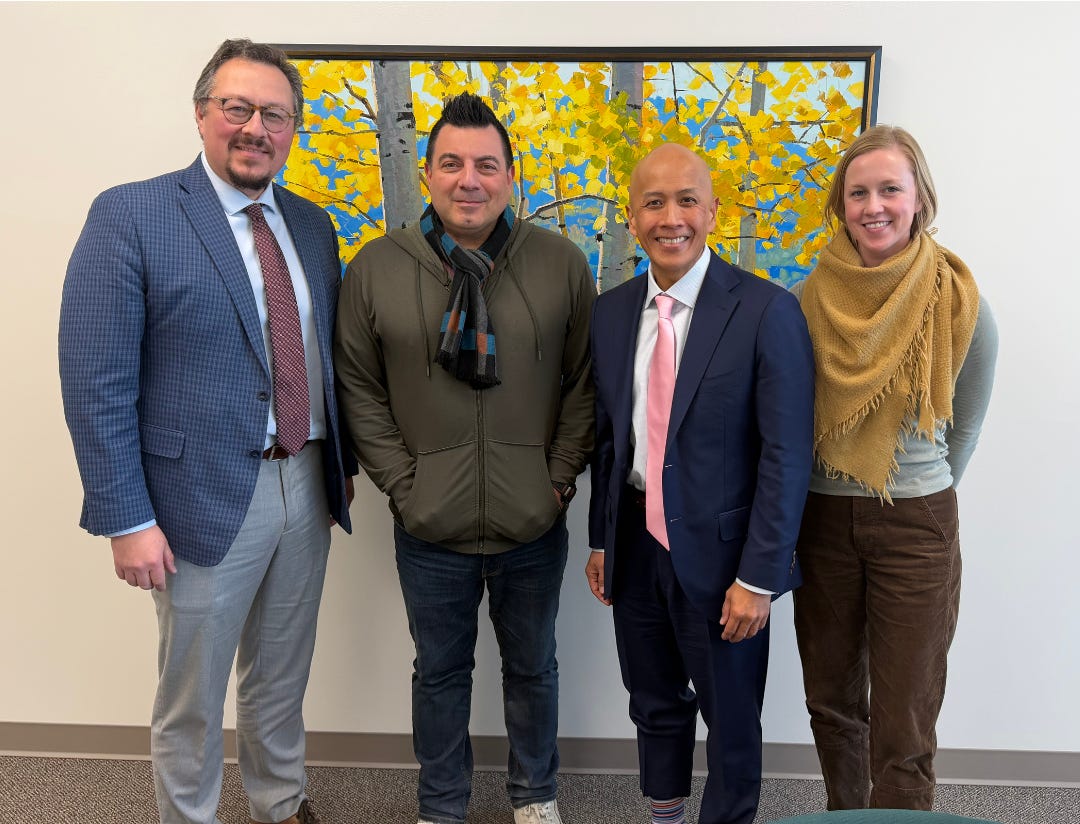
I recorded this conversation inside ULINE’s 1.5 million square foot warehouse with Gil De Las Alas, ULINE’s Chief Human Resources Officer and Dmitry Dukhan, ULINE’s Senior Vice President of Real Estate and Construction. My friend Allison tagged along for this adventure, too.
It’s the largest distribution center in Wisconsin and one of the largest in the country. It’s so big that we had to drive around it for the tour, and even then it took a while. Someone casually mentioned that 20 laps around the building equals a marathon.
Video provide by ULINE.
But the thing that stuck with me wasn’t the size of the building. It was how un-startup-like the entire place felt yet how innovative it actually was.
This Is Not the Kind of Innovation I Usually Talk About.
When I talk with leaders about innovation, we usually get right into it around speed, disruption, new tools, ideas or platforms. Chaos, but the “good” kind of chaos.
Well, ULINE doesn’t really do chaos.
This building exists for one reason: when customers order something, it shows up, fast. Same day shipping happens about 95% of the time. No excuses.
That’s the innovation.
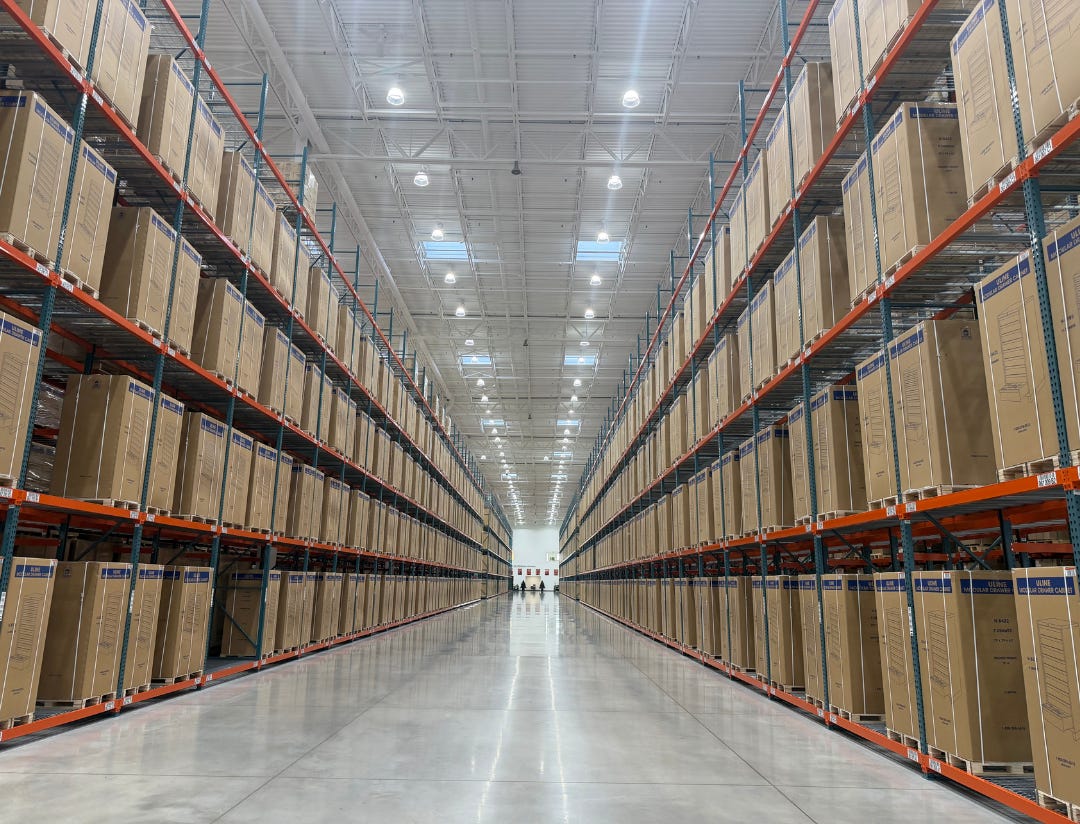
This facility is a very intentional investment in making sure the supply chain doesn’t break, even if something else does.
Dmitry Dukhan, ULINE’s Senior Vice President of Real Estate and Construction, on the “why” for the 1.5 million square feet distribution center.
What this reveals about Milwaukee:
Innovation is often easier to recognize when it looks like software, unique branding, or a fancy startup. But Milwaukee’s future may depend just as much on the quieter systems thinkers building logistics, operations, distribution, and scale.
Also…There’s Art Everywhere?
Here’s something I did not expect walking through a massive distribution center: artwork. Everywhere.
I asked about it, and what I learned is that every ULINE building looks like this. Same standards. Same attention to detail.
The message is pretty clear: this is a place and a company they want you to be proud of. Culture expressed in the physical space.
People Aren’t a Cost Center Here.
In a world where warehouse and fulfillment operations often see turnover anywhere from 50% to 100%, at ULINE, it’s less than 10%.
Why?
I learned (and heard over and over) that ULINE is very picky about hiring.
Dmitry Dukhan, ULINE’s Senior Vice President of Real Estate and Construction, emphasizes ULINE’s commitment to its people.
And employees are invested in financially (there literally was a big profit share check in the building at the time of my tour!), physically, and culturally.
Because, as ULINE believes, and what they’ve proven, is that if you get the people part right, everything else gets easier.
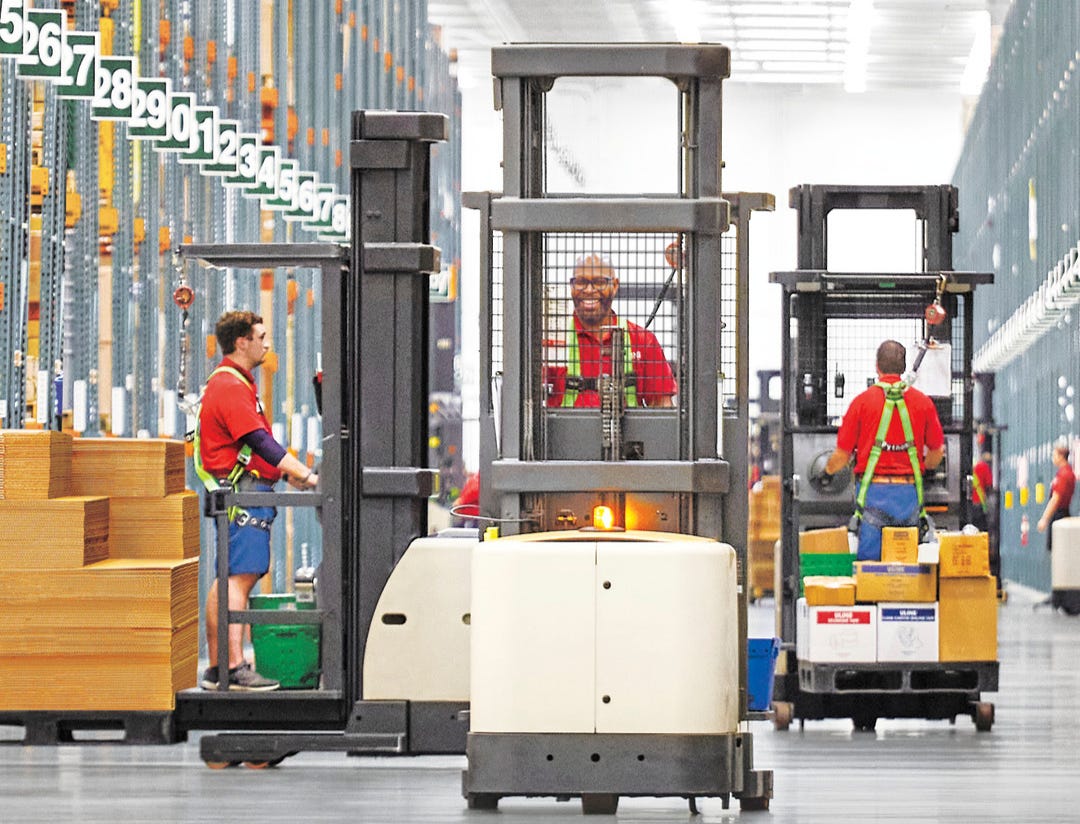
Photo provide by ULINE.
Sometime, for ULINE, Innovation Means Saying “No.”
One of the most honest moments in the conversation came when we talked about innovation at scale.
Everyone has ideas or a “better way” to do things. Especially in a growing company.
But as Gil put it: everyone’s one great idea quickly becomes 10,000 ideas.
Gil De Las Alas, ULINE’s Chief Human Resources Officer, on the company’s approach to innovation.
That’s where complexity can creep in. And complexity, ULINE believes, can hamper growth.
So, at ULINE, innovation is carefully curated
Two questions matter:
Is this good for the customer?
Is this good for employees?
If an idea doesn’t clearly pass both, then that idea doesn’t move forward.
This is very different from environments where innovation means autonomy. At ULINE, restraint is the strategy.
Why ULINE’s Customer Service Is So Good (And Why That Matters).
I’ve ordered from ULINE. They are annoyingly good.
You call? A person answers. No phone tree.
Turns out that’s very intentional.
ULINE employs about 1,000 in-house customer service reps. Comments are read internally. Leadership reads them. Patterns are noticed. Feedback turns into decisions.
Gil De Las Alas, ULINE’s Chief Human Resources Officer, explains the importance of in-house customer service.
There’s even a light on the floor that starts blinking if a call isn’t answered quickly enough. That’s how seriously they take it.
In a world obsessed with dashboards and AI-driven insights, this felt almost rebellious or even old-school as I noted in my interview.
But innovation doesn’t always need better tools. Sometimes it just needs to get back to the basics.
Does Midwest Innovation Looks Like This?
ULINE has been in Kenosha County for 15 years. A third of their workforce comes from the local area. They’ve helped reverse commuting trends and anchor real, long-term employment.
In a lot of ways, this is Midwest innovation. I mean, I talked about this sort of legacy in my most recent Monday newsletter.
In Milwaukee and Wisconsin, we focus on operational excellence. Long-term thinking. Investing in people and place and staying put.
For better or worse.
And maybe that’s the uncomfortable takeaway.
Dare I say: what if our region’s competitive advantage isn’t in making the world’s best startups, but in having more large companies that know how to scale?
It’s a thought that keeps me up at night, to be honest.
Rethinking Innovation (At Least a Little).
Walking through that building, surrounded by art, safety systems, and massive efficiency, I kept thinking: this is what innovation looks like when it’s built to last.
Not trendy, but relentlessly focused on customers, employees, and doing the fundamentals better than anyone else.
In a moment obsessed with disruption, ULINE is a reminder that “not-so-exciting,” done exceptionally well, can still win.
And honestly? That’s a version of innovation we should probably talk about more.
3 things ambitious readers can learn from this:
Innovation is not just invention. It is often operational excellence at a high level at scale.
Some of the smartest career opportunities in Milwaukee sit inside systems-heavy businesses.
Learn to spot leverage in places other people overlook.
Here’s the full audio conversation I had with Gil and Dmitry.