


Something happened last week.
As usual, I had a number of meetings (and happy hours) with Milwaukee tech founders, corporate leaders, media, even lawyers (yes, lawyers, and somehow I’m still energized!). I also had an exciting conversation with the team at Midwest House about a potential partnership. More on that next month.
My goal with these meetings is always simple: let’s see what’s on everyone’s radar and find overlaps for collaboration. Basically, how can we continue to help each other and move Milwaukee forward.
Because building takes effort from the ENTIRE community. Not one or two Business Improvement District (BID) directors. Which, by the way, I was asked to meet with a couple of BID directors who basically interrogated me on my plan for the Walker’s Point Innovation District while reminding me they essentially do the same thing and then they both left after 11 minutes of said interrogation even though we slotted 60 minutes for the meeting. But that’s a rant and I digress. (Side note: I will have more on the Innovation District soon, too.)
Anyway, I don’t go into these conversations each week trying to shape the narrative. I don’t drop themes. And I definitely don’t share who else I’m meeting with or what they’re saying.
Which is why what happened completely floored me.
Overwhelmingly, across every conversation, a single thread emerged: everyone shared how they’re doubling down on Milwaukee.
How?
Companies are moving teams back into and around the city’s center. Entrepreneurs and investors are more focused on building and what’s being built here. All of this helps our community.
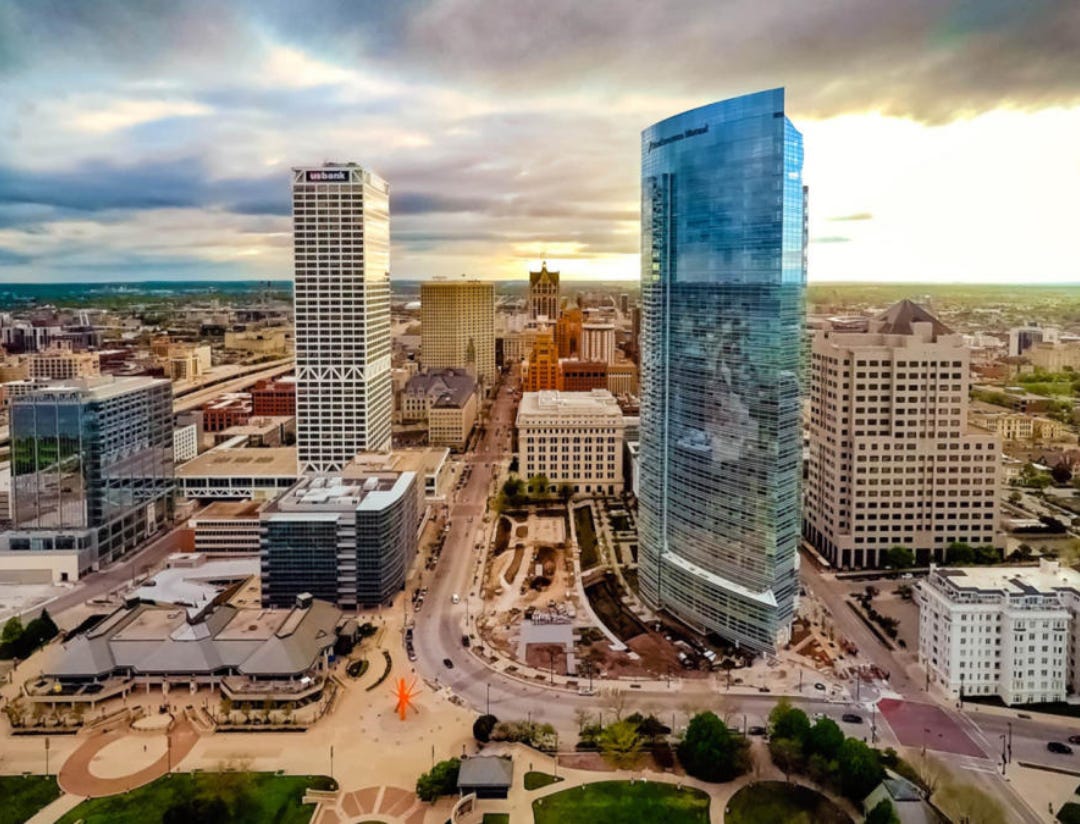
Why this matters for ambitious readers:
A return to in-person work does not just change commutes. It changes who gets seen, who builds trust faster, and which neighborhoods, businesses, and local networks benefit from renewed daily activity.
I know return-to-office has its challenges.
It’s not universally welcomed, and there’s been plenty of valid pushback from employees who thrive with flexibility, to parents juggling work and life commitments, and to those who question whether in-person really equals better productivity. As a parent of four kids, I get it. Some of that tension came through in the conversations I had, too.
But let me give you additional perspective.
From my point of view, here’s what’s also true.
When people come back into the city, even a few days a week, it creates a positive ripple effect. Restaurants feel it. Neighborhoods feel it. And people bump into each other, talk, and share ideas, spark momentum (that cosmic collision factor!).
Physical presence isn’t just ideal for innovation, it propels it forward like few other things can.
And in Milwaukee, that’s exactly what’s happening.
Return-to-office is a boost to local.
Look around any major city and you’ll notice something: ecosystems are often built around the footprint of big companies. In most cases, the entire “third space” that lives between home and work depends on this density of people.
When remote work took over, many of the third spaces in the heart of Milwaukee took the hit.
Even more, here’s what really gets me.
Before the increase in remote work, proximity to a company’s headquarter was a strategic edge for Milwaukee workers and for the city itself. You had to live here in Milwaukee, in the cold and snow, too, in order to get a gig at one of our big, well-known companies. That created a natural incentive for people to actually LIVE here!
Suddenly, geography didn’t matter. Which really pisses me off!
Warm-weather residents were now competing for roles based in Milwaukee.
Return-to-local flips that back.
Because Milwaukee companies are telling me they’re shifting back to Milwaukee talent as a priority over remote jobs and that helps rebalance our local economy.
Return-to-office is a boost for entrepreneurs.
Starting a business is a risk. A big one.
One of the upsides to that risk is that you got to choose where and how you work. You pick the city. You chose the space and the schedule.
But that went away when everyone else got those same things.
The flexibility and freedom that differentiated entrepreneurs became table stakes for almost every office job. You didn’t have to build a company to work from Door County, you just had to log into Slack.
I believe the democratization of work location had a side effect of diluting one of the key lifestyle advantages of entrepreneurship. Which creates a vulnerability if you want more entrepreneurs in Milwaukee.
I understand this could seem trivial at the surface, but I heard it, saw it, and experienced it myself.
As more companies bring employees back to the office I think it will give entrepreneurship a boost.
What happens next?
Return-to-office is an initiative.
But return-to-local could be a differentiating strategy for Milwaukee.
It’s a strategy that benefits more than companies. It lifts neighborhoods.
I walked away from last week feeling more excited than ever because people weren’t just telling me they were coming back or re-committing to Milwaukee.
They said they are doubling down.
Knowing this, what are you going to do? What will you build? Where will you work? How will you double down?
Milwaukee needs it now more than ever.
One last thing: I’m kicking off the City Innovation Tour this week!
Yep, an early morning flight tomorrow will put me in Phoenix for the week.
I’m not just going because it’s 75 and sunny there, but also because the Milwaukee Brewers invited me there to experience and report on all the cool tech at American Family Fields of Phoenix.
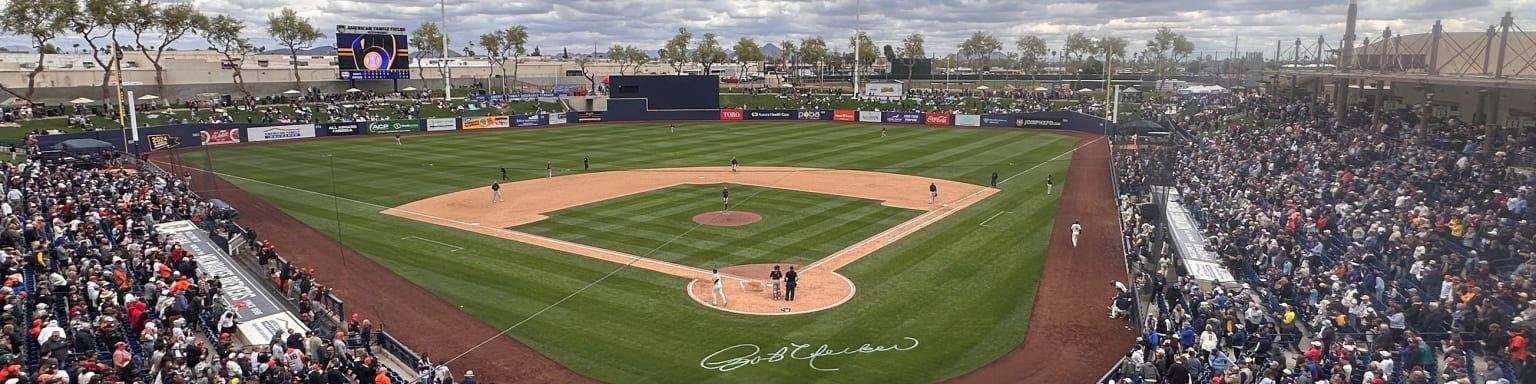
American Family Fields of Phoenix. Photo credit.
I’m also spending time with Phoenix tech startup and innovation leaders to learn more about how they’re looking at things like return-to-local and many other important issues.
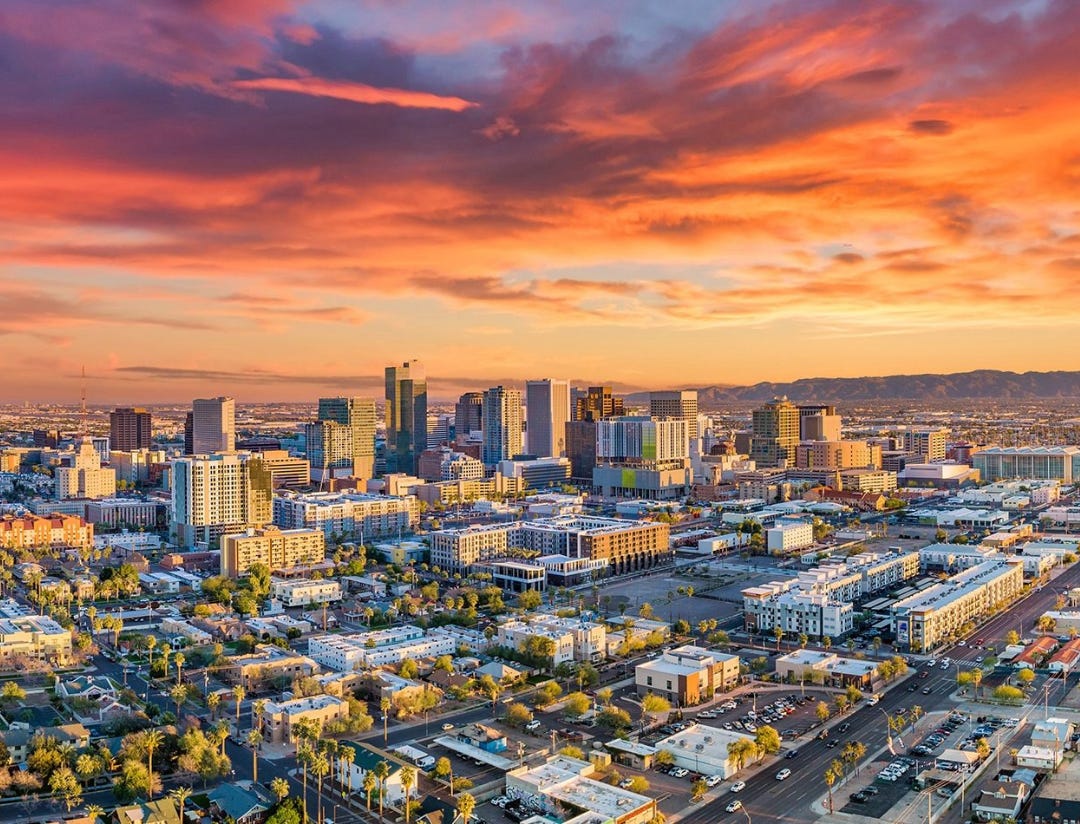
Downtown Phoenix. Photo credit.
This is the first stop on my 2026 City Innovation Tour. I will bring back and share everything I learn so Milwaukee can be smarter and you can build better.
Love you Milwaukee!
What to watch.
Offices can become relationship accelerators again.
Local businesses and districts benefit when work becomes more place-based.
For early- and mid-career professionals, more time in rooms can create more chances to be known, trusted, and included.
P.S. Last week I was also invited by my friend Bill Mitchell to be on the ConversActions podcast to share the origin story and the “why” for my commitment to Milwaukee and to all of you. Check it out on Spotify.
The office-centric economy is not a public good, thus the remote worker *mandated*, not *choosing* to go back in person is performing no civic duty.
These conditions are not accidental. They follow from long-term, path-dependent choices about planning and capital deployment made by a small, insular group of decision-makers.
No one voted to create office buildings that can only serve a single purpose, no public demanded rigid zoning that blocks adaptation, and no collective body chose to structure cities around a narrow peak-hour commuting model.
Those constraints were voluntarily adopted by planners, developers, and financial actors pursuing a particular equilibrium that worked for them.
When that equilibrium breaks down, it is unreasonable to shift the expectation to restore it onto everyone else.